

Feng Shui garden design for beginners: A step by step guide
If you love to garden, you are probably planning what to plant and where around this time. Did you know that what we plant and where can have an impact on the energy that enters our home? And we can use any outdoor garden areas (even balconies) as an extension of the energy that surrounds our home.
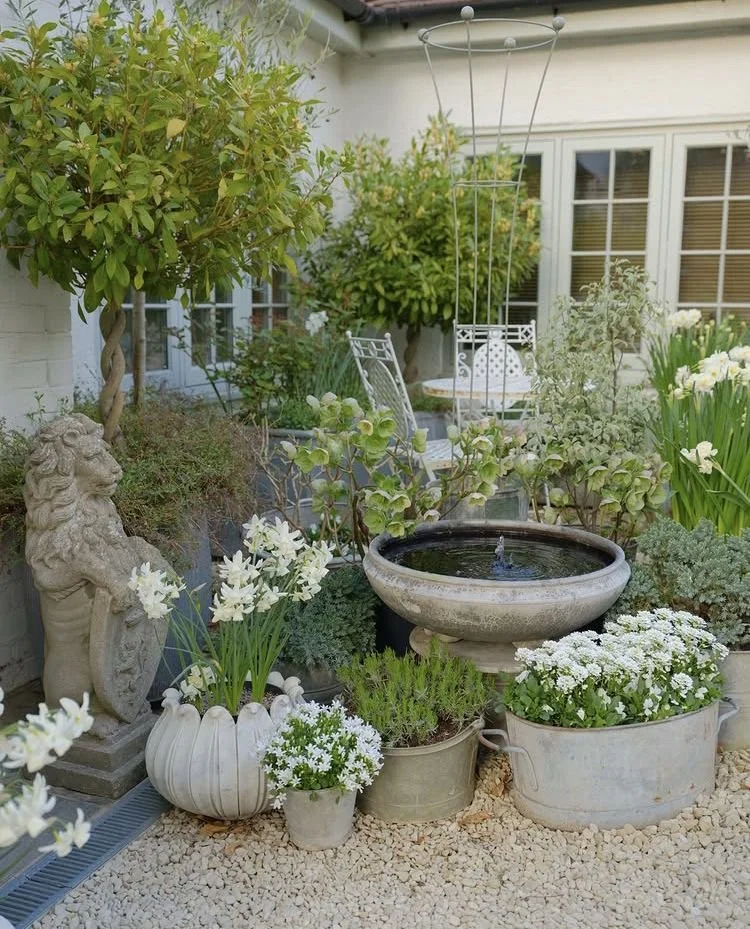
This year i am very excited because i have ordered some Dahlia tubers. It will be my first year growing Dahlias on the farm. Last year i did easier flowers, this year, i am really going to step out of my comfort zone.
As well as Dahlias, i have sweet peas, zinnias, and cosmos seeds, along with my vegetables that i grow every year. I really believe that growing anything is 25% method, 25% care, and 50% energy! With that said, Feng Shui is a tool that we can use to help the energy in our gardens.
In Feng Shui, your garden isn’t just landscaping, it is an extension of your home’s Chi (life force energy). When designed intentionally, your outdoor space can attract abundance, improve relationships, boost health, and create balance and peace.
If you are new to applying Feng Shui to your garden, keep it simple. Here is a beginner friendly step by step guide to designing a Feng Shui garden.
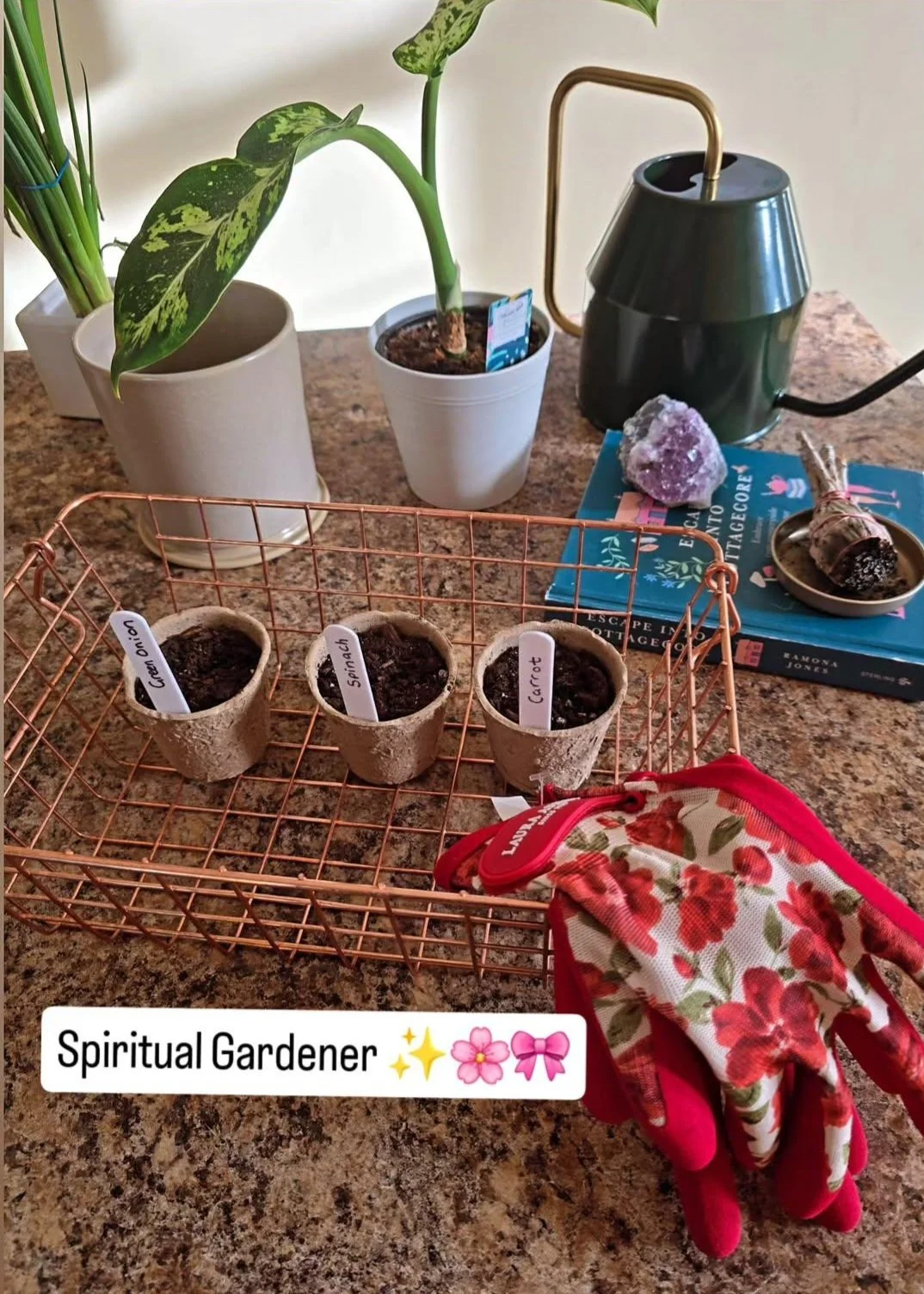
My gardening vibe ✨
Step one: Start with clean energy
Before you plant anything, clear what is stagnant.
In Feng Shui clutter blocks Chi. Dead plants, broken pots, rusty furniture, and over growth, create energetic stagnation.
To do list:
Remove dead or dying plants.
Clear broken decor.
Trim over growth.
Sweep pathways.
Wash down patio areas.
This is the best place to start. You can’t build abundance on neglected energy.
Step two: Map your garden with the Bagua map
To design intentionally, you need to understand which areas of your garden connect to each area of the Bagua map.
Align the bottom of the Bagua with your back door looking out.
If you are unfamiliar with the Bagua, start simple: identify the wealth corner (back left corner) As it is often the easiest place to activate first.
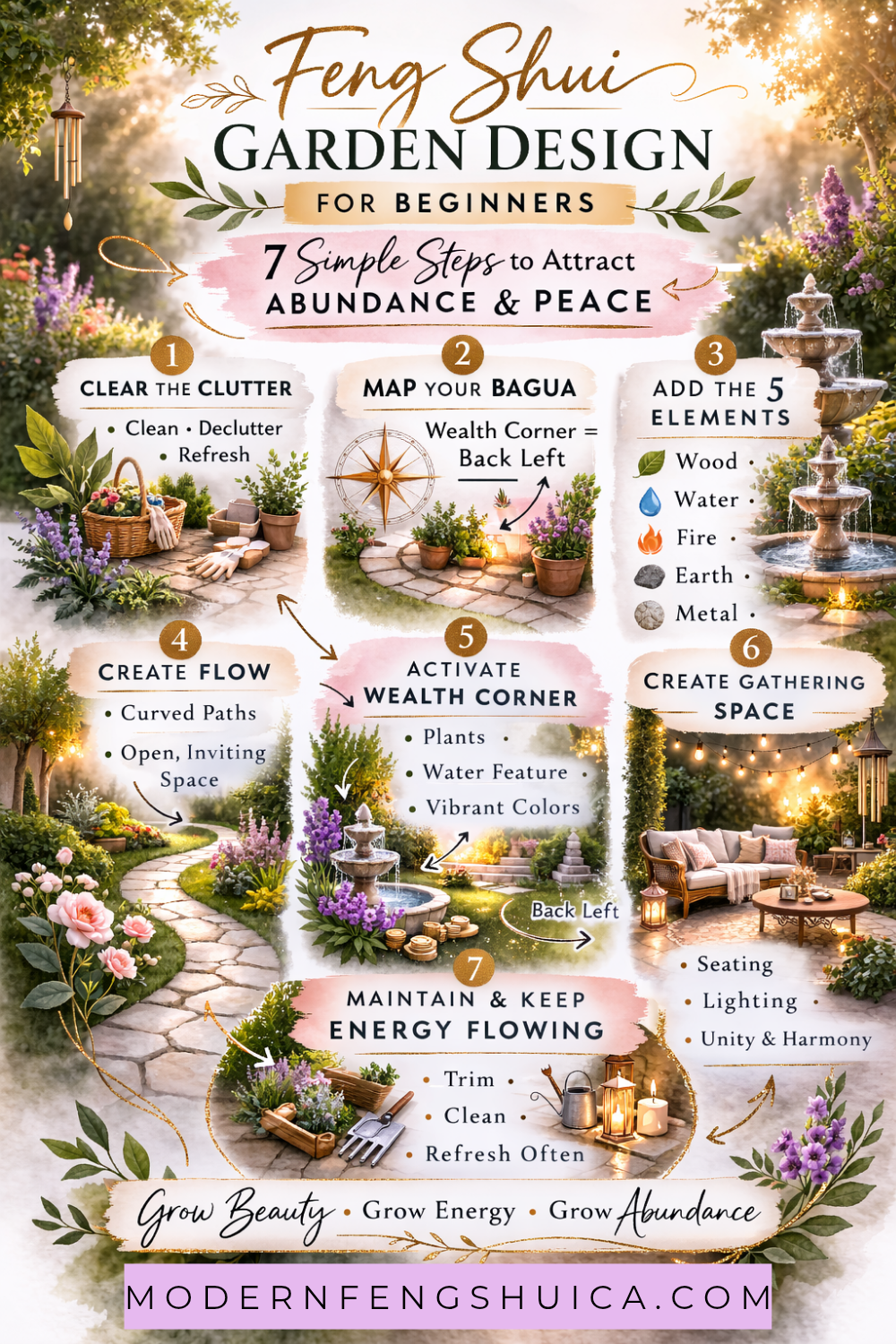
Step three: Incorporate the 5 elements
Feng Shui is built on five elements. A balanced garden includes them all.
Wood: Represents growth and expansion.
Add: Trees, shrubs, tall plants, and wooden structures.
Water: Represents flow and wealth.
Add: Fountains, ponds, and birdbaths (keep water clean and moving)
Earth: Represents stability and nourishment.
Add: Rocks, clay pots, and stone pathways.
Fire: Represents visibility and passion.
Add: Red flowers, lanterns, outdoor lighting, and fire pits.
Metal: Represents clarity and precision.
Add: Metal planters, White flowers, and metal windchimes.
Step four: Design curved pathways
Straight lines move energy too quickly.
Instead:
Use curved pathways.
Soften harsh corners with plants.
Place any stepping stones in curved shapes not straight lines.
Step five: Activate your wealth corner
The wealth corner (back left) is powerful.
To activate it:
Add healthy, thriving plants.
Place a water feature.
Use purple, green, or gold shade flowers.
Keep it clear of weeds and maintain it often.
Avoid bins, dead plants, storage piles.
Step six: Create a gathering area for harmony
A Feng Shui garden should support connection.
Add:
A small seating area.
A round table.
Soft lighting.
Step seven: Keep energy moving all season
Throughout the seasons you should be maintaining your garden spaces. This will make sure the energy that surrounds your home is always in good condition.
I always say that the spaces around any home is its aura.
Throughout the seasons:
Trim dead growth.
Clean water features.
Refresh flowers.
Adjust decor as needed.
Common beginner mistakes to avoid
Ignoring dead plants.
Overcrowding certain areas.
Blocking pathways.
Treating the garden separate from the energy of your home.
Letting weeds take over.
Leaving dead patches of grass.
